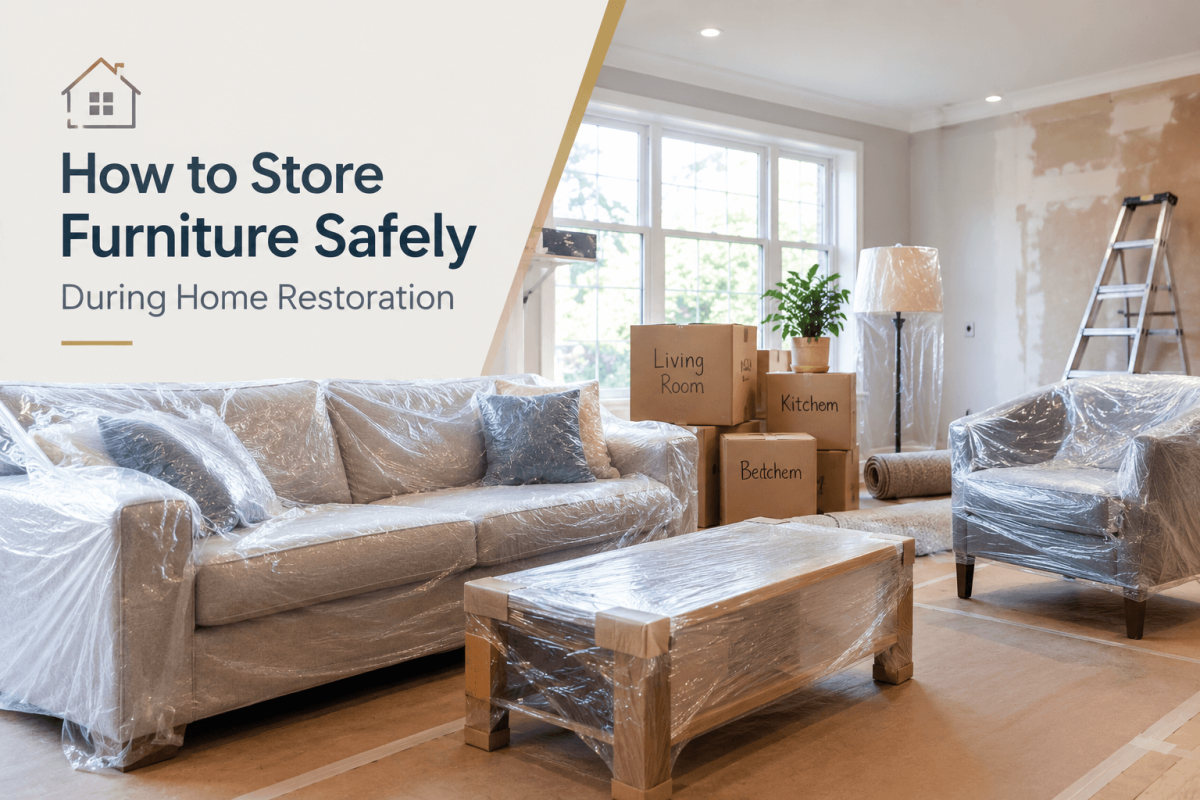
Home restoration can quickly turn a familiar room into a working area filled with dust, tools, protective sheets and building materials. Whether the work involves repairing water damage, replacing flooring, treating damp or carrying out wider refurbishment, furniture can easily become an afterthought.
Leaving sofas, wardrobes and wooden furniture in the middle of the work can expose them to dust, moisture, accidental knocks and even damage from contractors moving materials around the property. Moving everything out without a plan, however, can create a different set of problems.
Good furniture storage during restoration is therefore less about simply finding somewhere to put things and more about controlling the conditions in which they are kept.
Decide What Needs to Be Moved First
Not every item necessarily needs to leave the property. Furniture in an unaffected room may be able to remain there if the area can be properly separated from the restoration work.
Start by identifying which rooms will be affected and how far the work is likely to spread. Items in the immediate work area should generally be moved first, particularly upholstered furniture, wooden pieces, electronics and anything with a delicate finish.
Large wardrobes and cabinets should not be left simply because they are difficult to move. Dust can settle inside them, while vibration, falling materials or changes in humidity may cause problems during longer restoration projects.
At the same time, avoid moving furniture unnecessarily through areas where work is already taking place. Every additional journey creates another opportunity for scratches, knocks or accidental contamination.
Clean Furniture Before Putting It Into Storage
Furniture should be reasonably clean before it is covered or stored. This is particularly important for pieces that have been sitting in a room affected by dust or moisture.
Vacuum upholstered furniture carefully, wipe hard surfaces with an appropriate cleaner and remove loose dirt from drawers and cupboards. Do not aggressively clean delicate finishes simply for the sake of storage, as some older furniture may require specialist treatment.
If the property has experienced water damage, the approach needs to be more cautious. Furniture that has been exposed to contaminated water, prolonged dampness or visible mould should not simply be dried and placed into storage. The condition of the item needs to be assessed first.
FEMA guidance notes that wooden furniture affected by water should be dried slowly and evenly because rapid or uneven drying can contribute to warping, splitting and cracking.
Choose the Right Storage Location
A spare room may be sufficient for a short refurbishment, but it is not automatically a suitable storage area.
The space should be dry, reasonably clean and protected from significant temperature or humidity changes. Garages, sheds, lofts and basements can sometimes be convenient, but their conditions need to be considered carefully before furniture is placed there for several weeks or months.
Wood responds to changes in moisture, while upholstered furniture can absorb dampness and develop unpleasant odours. Paper, fabrics and other porous materials are particularly vulnerable if the storage area becomes humid.
For valuable, antique or sentimental pieces, a professional storage facility may be more appropriate than an improvised area at home.
Do Not Wrap Everything Tightly in Plastic
Plastic sheeting is useful for protecting furniture from construction dust, but completely sealing furniture in plastic for a prolonged period can create problems if moisture is already present.
A better approach is to make sure the furniture is dry before covering it and use suitable breathable protective materials where appropriate. Covers should protect surfaces without trapping condensation against them.
This distinction becomes particularly important after water damage. FEMA advises against sealing certain wet textiles in plastic bags, while damaged materials need appropriate drying and ventilation before being returned to normal use.
For ordinary renovation work, clean furniture covers can provide useful protection from dust and minor debris. They should still be checked periodically rather than being placed over furniture and forgotten about until the project is finished.
Protect Furniture From the Floor
The floor beneath stored furniture deserves attention as well.
Even when a room appears dry, restoration work can involve water, cleaning products, paint, plaster and other materials. Furniture placed directly on a vulnerable floor may also be affected if moisture reaches the room unexpectedly.
Where practical, raise furniture slightly from the floor using suitable supports designed to take its weight. Avoid improvised arrangements that could make heavy pieces unstable.
Do not position furniture where it could obstruct doors, escape routes, electrical panels or access needed by contractors. Storage should never make the working environment less safe.
Give Wooden Furniture Extra Care
Solid wood furniture can be particularly vulnerable during restoration because changes in humidity can affect the material.
Avoid placing wooden tables, cabinets or chairs directly beside radiators, heaters, dehumidifiers or other strong heat sources in an attempt to keep them dry. Uneven or rapid drying can damage wood finishes and cause movement within the material.
For valuable furniture, it is also worth documenting its condition before moving it. Take photographs of existing scratches, marks and areas of damage. This can be useful for insurance records and makes it easier to distinguish pre-existing damage from anything that may occur during the restoration process.
Where an item has already been affected by water, professional advice may be preferable to attempting a quick DIY repair.
Take Care With Upholstered Furniture
Sofas, armchairs, mattresses and other upholstered items require particular attention because fabric and internal padding can retain moisture long after a surface appears dry.
If upholstery has been exposed to significant water damage, do not assume that simply covering it and placing it in storage will solve the problem. Dampness trapped inside the material can lead to odours and mould.
FEMA’s restoration guidance recommends removing saturated porous materials from affected areas promptly, while also warning that waterlogged furnishings can be considerably heavier and more difficult to move safely.
For furniture that has suffered substantial water or smoke damage, professional assessment may be more sensible than moving it into clean storage and potentially affecting other belongings.
Label and Photograph Everything
Once furniture has been moved out of the working area, it can become surprisingly difficult to remember where everything belongs.
Before dismantling wardrobes, beds or shelving, photograph them and keep screws, brackets and other small fittings together in clearly labelled bags. Attach the relevant bag to the furniture where possible rather than leaving hardware in a general box.
Labels can also identify the room each item came from. This makes putting the property back together much easier when the restoration work is complete.
For larger projects, a simple inventory can be worthwhile. Record valuable pieces, their condition and where they have been stored. If the restoration follows an insured incident, photographs and records may also be useful when discussing damaged belongings with an insurer.
Keep Restoration Work and Stored Furniture Separate
If furniture has to remain inside the property, create as much separation as possible between the storage area and the restoration zone.
Close doors where available, use appropriate dust barriers and avoid turning a clean room into a temporary materials store. Contractors may need access to tools and building materials, but these should not be stacked against stored furniture simply because there is available space.
For restoration following significant water damage, fire or another serious incident, the separation needs to be considered alongside the wider condition of the building. A property may require specialist assessment before belongings can safely be moved back into affected areas.
Homeowners dealing with this type of situation can learn more about professional restoration and the appropriate response through services such as Express Restoration.
Be Particularly Careful After Water Damage
Water damage changes the storage equation considerably.
Furniture should not be treated as safe simply because it has been moved away from the visible source of water. Moisture can remain within flooring, walls, upholstery and wooden furniture, while high humidity can continue to affect belongings after the obvious water has been removed.
The first priority should be dealing with the source of the damage and establishing whether the affected areas are properly dry. Items that have been exposed to contaminated water may require specialist handling rather than ordinary household cleaning.
Professional water damage restoration can be particularly important where water has affected structural materials or valuable contents. Moving furniture into another room without addressing the underlying moisture problem may simply move the risk rather than solve it.
Avoid Overfilling a Storage Space
It can be tempting to push everything into one spare room and close the door until the restoration is complete. This often makes things harder.
Furniture packed tightly together cannot be inspected easily, and restricted airflow can become an issue where humidity is present. It also becomes difficult to reach individual pieces without moving several others.
Leave enough space to walk around stored items where practical. Keep heavier furniture positioned securely and avoid stacking boxes on top of pieces that could be damaged by their weight.
A little organisation at the beginning can save considerable time when the restoration project reaches its final stages.
Bring Furniture Back Gradually
Once the restoration work is finished, resist the temptation to return every item immediately.
Allow newly repaired or decorated areas to dry and settle properly. Check for lingering dampness, dust and construction residue before bringing furniture back into the room.
Clean the furniture as necessary, inspect it for damage and return larger pieces carefully. If flooring, plaster, paint or other materials have recently been installed, follow the relevant manufacturer’s or contractor’s advice about drying and curing times.
The final stage should be treated as part of the restoration rather than an afterthought.
Protect the Furniture as Well as the Property
A successful home restoration is not only about repairing walls, floors, ceilings or fixtures. The contents of the property can represent a significant financial and sentimental investment, and poor storage can create avoidable damage while the main work is being carried out.
The safest approach is straightforward: move vulnerable items away from active work, keep them dry, protect them from dust without trapping moisture, document their condition and use professional assistance where water or other serious damage is involved.
With a little planning, furniture can remain protected throughout the restoration process and be ready to return once the property is clean, dry and properly restored.
Checkout for more details about Furniture Restoration https://expressrestoration.net/ and Water Damage Restoration https://expressrestoration.net/