
A tenant notices a faint damp patch behind the kitchen cupboards. It seems harmless, so nobody reports it immediately. Several weeks later, the skirting board has swollen, the flooring has started lifting and the adjoining wall feels damp. What might have been a relatively straightforward plumbing repair now requires a wider investigation.
Hidden water leaks in rental properties present a particular challenge because landlords and managing agents cannot observe a building’s condition every day. Problems may develop behind fitted furniture, beneath floors or inside walls, with the first visible signs appearing some distance from the source.
Recognising changes early, responding appropriately to tenant reports and understanding how leaks are investigated can help protect the property while limiting disruption for occupants.
1. What Causes Hidden Water Leaks?
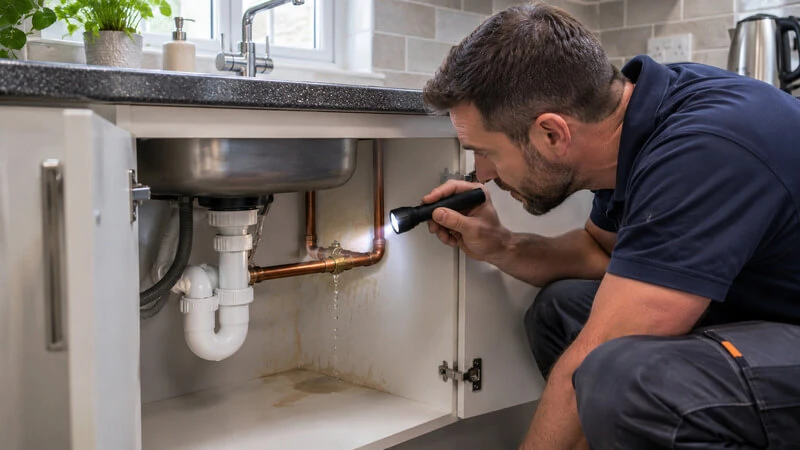
Modern homes contain extensive networks of supply pipes, waste connections and plumbing fittings. Some are readily accessible, while others are concealed behind plasterboard, beneath floor coverings or within service ducts.
A leak can develop for several reasons.
Ageing pipework may become vulnerable to corrosion, particularly where older metal pipes have experienced prolonged exposure to unfavourable water conditions. However, age alone does not establish whether a system is defective.
Faulty joints and fittings are another possibility. Poorly installed connections, deteriorated seals or movement within the building can contribute to water escaping from plumbing components.
Bathrooms and kitchens deserve particular attention. Shower trays, bath waste connections, toilet cisterns, washing machine hoses and sink fittings can all develop faults.
Not every water-related defect involves a pressurised supply pipe. Water may escape only when someone uses a shower or empties a bath, making intermittent problems harder to identify.
The first task is therefore to establish which system might be responsible, rather than assuming that every damp patch indicates a burst pipe.
2. Seven Warning Signs Landlords Should Never Ignore
The following symptoms can help landlords and letting agents recognise when further investigation is justified. None provides a definitive diagnosis on its own.
1. Unexplained increases in water consumption
An unexpected rise in metered water usage may indicate that water is escaping somewhere within the plumbing system.
Before suspecting a concealed leak, consider changes in occupancy, additional appliance use, garden watering and continuously running toilet cisterns.
Where a meter is accessible, a comparison of readings during a period when no water is intentionally being used may provide useful information. Remember that some appliances automatically draw water.
A meter that continues recording consumption warrants investigation, but it does not identify the precise source.
2. Damp patches on walls or ceilings
Discolouration, localised dampness and staining can indicate moisture entering building materials.
A patch beneath an upstairs bathroom may be associated with a defective waste connection or shower installation. Moisture appearing after heavy rainfall could instead originate from the roof or external walls.
Pay attention to when staining develops and whether it spreads. Photographs taken over time can help contractors understand the pattern.
3. Peeling paint and damaged finishes
Bubbling paint, lifting wallpaper, swollen skirting boards and distorted flooring can suggest prolonged exposure to moisture.
These changes are particularly worth investigating near kitchens, bathrooms and concealed plumbing routes.
However, damaged decoration does not automatically prove that a pipe is leaking. Surface condensation, previous water damage and rainwater penetration can produce similar symptoms.
Repainting without establishing the cause risks concealing a continuing problem.
4. Recurring mould growth
Mould develops where moisture conditions allow it to grow. In rented accommodation, recurring mould should prompt consideration of the building’s ventilation, heating, insulation and possible water ingress.
A leaking pipe is only one potential explanation.
Mould around cold window reveals may be associated with condensation, while persistent growth around a damp service enclosure could justify plumbing checks.
Cleaning visible mould without addressing the moisture source is unlikely to provide a lasting solution.
5. Persistent musty smells
A musty smell inside a cupboard, bathroom or enclosed room can indicate damp materials that are not immediately visible.
Check accessible areas beneath sinks, around appliances and behind removable access panels.
Smells may also arise from poor ventilation, condensation or drainage problems. Their presence should guide further inspection rather than be treated as proof of a concealed supply-pipe leak.
6. Unusual plumbing sounds
A continuous sound resembling running water when taps are closed may indicate an unexpected flow within the plumbing system.
However, running toilet cisterns, heating equipment, valves and other appliances can produce similar noises.
Knocking or vibration may be associated with pressure changes or inadequately supported pipes rather than leakage.
Ask tenants when the sound occurs and whether it continues when water-consuming appliances are inactive.
7. Changes in water pressure
A sudden reduction in pressure at several outlets may justify checking the property’s water supply and internal plumbing.
If only one tap is affected, a blocked aerator or faulty mixer may be responsible. Wider pressure changes can result from network conditions, valves, restrictions or, occasionally, leakage.
Compare hot and cold outlets and establish whether neighbouring properties have experienced similar problems.
Reduced pressure is a useful warning sign, but not a reliable diagnosis by itself.
3. Hidden Leaks vs Condensation and Rainwater Ingress
One of the most expensive maintenance mistakes is treating every damp problem as though it has the same cause.
Plumbing leaks originate from water supply, heating or drainage installations. Symptoms may correspond with water consumption or the use of particular fixtures, although concealed leaks can also produce continuous moisture.
Condensation occurs when moist indoor air meets sufficiently cold surfaces. It commonly affects windows, external corners and areas with limited air circulation.
Rainwater ingress may result from defects in roofing, external walls, window junctions, gutters or other weather-exposed components.
The timing of symptoms offers useful clues. Dampness that worsens after rainfall suggests a different investigation from moisture that appears whenever an upstairs shower is used.
Nevertheless, patterns can overlap. Water can travel along structural elements before becoming visible, and more than one moisture problem may exist simultaneously.
Accurate diagnosis matters because replacing a pipe will not resolve condensation, while improving ventilation will not repair a leaking waste connection.
4. How Professionals Detect Concealed Water Leaks
Professional water leak detection involves selecting diagnostic techniques appropriate to the suspected fault, the pipework and the surrounding building materials.
The aim is to narrow down the likely source before deciding whether any building fabric needs to be opened.
Acoustic leak detection
Specialist listening equipment can help identify sounds generated by water escaping from pressurised pipes.
The results depend on water pressure, pipe material, background noise and the position of the defect. A small leak in a difficult acoustic environment may be challenging to locate.
Acoustic equipment is therefore a diagnostic aid, not a guarantee of pinpoint accuracy.
Thermal imaging
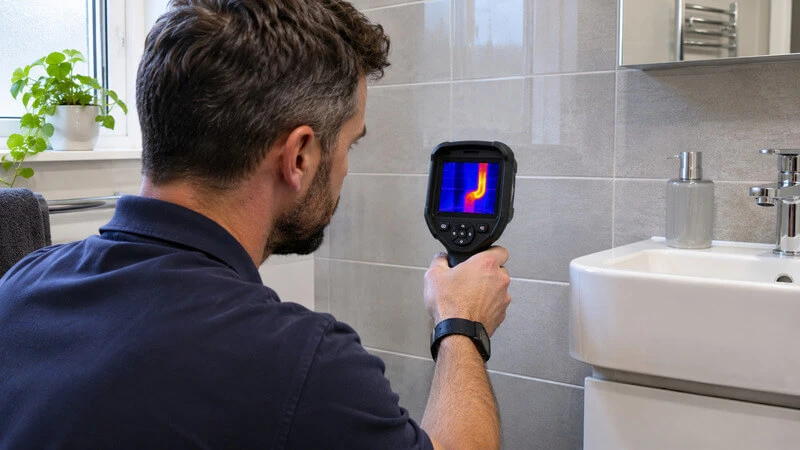
Thermal cameras display differences in surface temperature. They can sometimes reveal patterns associated with hot-water leaks or moisture affecting building materials.
However, a thermal image does not directly show water inside a wall.
Insulation gaps, heating pipes, sunlight and other temperature variations can produce patterns that require careful interpretation.
Moisture measurements
Moisture meters help technicians assess the distribution of dampness and compare affected areas.
Different instruments respond differently to materials, and readings can be influenced by salts, metal components and construction characteristics.
They are useful for mapping suspicious areas and monitoring drying, but they cannot independently establish the source of a leak.
Pressure testing and targeted inspection
Controlled pressure tests can help determine whether an appropriate section of pipework is losing pressure. Results must be interpreted alongside the condition and configuration of the system.
Where necessary, contractors may combine these methods with visual inspection, access to service voids or other targeted investigations.
For a more detailed overview of diagnostic approaches, Portuguese water leak detection company TecFuga publishes a guide to detecting hidden water leaks. The resource is written in Portuguese and provides additional context on investigating concealed water leaks; UK landlords should use suitably experienced local professionals for their own properties.
Even with specialist equipment, some faults cannot be confirmed without limited opening-up work. A sensible investigation should explain the evidence, remaining uncertainty and proposed next steps.
5. What to Do When a Hidden Leak Is Suspected
A prompt, organised response can help limit damage without encouraging unnecessary or unsafe repairs.
First, establish the immediate risk. If water is escaping significantly, arrange for the relevant supply to be isolated where this can be done safely. Occupants should avoid electrical fittings or equipment affected by water and seek appropriate specialist assistance.
Next, document the symptoms. Ask tenants for photographs, the location of the affected area and details of when the problem first appeared. Record whether symptoms follow rainfall, appliance use or particular plumbing activities.
Check accessible fittings. Visible hoses, sink connections, toilet cisterns and appliance connections may reveal an obvious cause. Do not ask tenants to dismantle concealed pipework or undertake work beyond their competence.
Arrange appropriate professional assessment. A plumber may be suitable for an apparent plumbing defect, while a broader building investigation may be required where rainwater ingress or condensation is suspected.
Agree the repair and follow-up. Once the cause is identified, address the defect and assess whether affected materials require drying, replacement or further monitoring.
Landlords should also review any relevant insurance arrangements and keep a record of communications, inspections and completed work.
6. Preventive Maintenance for Rental Properties
Not every leak is preventable, but consistent maintenance can improve the chances of identifying developing faults before substantial damage occurs.
Routine inspections should focus on accessible plumbing, sanitary fittings, appliance connections and areas with a history of moisture problems.
Tenant communication is equally important. Occupants should know how to report a leak, what information to provide and whom to contact in an emergency.
A minor drip or unusual smell may seem unimportant to someone unfamiliar with building defects. Clear reporting arrangements make it easier to raise concerns promptly.
Maintenance records should include inspection dates, photographs, reported symptoms, contractor findings and completed repairs.
Where repeated faults occur in ageing plumbing, consider whether a broader assessment would be more appropriate than another isolated repair.
Preventive maintenance should be proportionate to the property’s condition, construction and previous problems rather than based on unnecessary replacement schedules.
7. Landlord Inspection Checklist
Use this checklist during routine inspections, with appropriate arrangements for tenant access:
- Check accessible pipes, valves and joints for moisture or corrosion.
- Inspect beneath kitchen sinks and around appliance connections.
- Look for damaged seals around baths, showers and sanitary fittings.
- Examine ceilings and walls for new staining or peeling finishes.
- Check skirting boards and flooring for swelling or distortion.
- Ask tenants about unexplained water consumption or pressure changes.
- Investigate persistent musty smells and recurring mould.
- Review previous repairs and photograph any developing defects.
- Record findings and arrange follow-up where necessary.
A checklist does not replace professional diagnosis, but it provides a consistent starting point for rental property maintenance.
Conclusion
Hidden water leaks in rental properties can develop without obvious warning, particularly where pipework is concealed or the first symptoms are mistaken for ordinary condensation.
Landlords who recognise changes in water consumption, dampness, finishes and plumbing performance are better placed to respond before problems become more disruptive.
The most useful approach combines regular inspections, clear tenant communication, accurate records and professional investigation when the source remains uncertain. Identifying the cause before carrying out repairs helps protect both the property and the people living in it.