It is easy to handle a small number of commercial tenants, but it is an entirely different ball game to manage a complete assortment of various businesses under the same roof. It is not merely space you are renting, but a mini-ecosystem with competing needs, characters, and priorities.
The good news? The correct strategies will enable you to make that complexity a true advantage—you can gain stronger relationships, vacancy will decrease, and you can guarantee greater long-term value for your properties.
Here is a list of clever, useful ideas that you can implement immediately.
1. Optimize Your Commercial Tenant Mix Strategy
The first step is knowing exactly who you are doing business with. A multi-tenant building can hardly be homogenous. You might have:
- A brick-and-mortar store that depends on foot traffic.
- A professional services company that requires clean, well-appointed meeting rooms.
- A small warehouse/logistics company specializing in loading access and storage.
- A cafe with the greatest care taken to utilities, ventilation, and flow.
Rather than considering them as a portfolio, consider your tenant mix as a portfolio:
- Who are your anchor tenants (the ones that bring in traffic or stability)?
- Who is more impermanent or price-sensitive?
- What types of businesses would be complementary and enjoy the benefits of being neighbors?
By knowing these dynamics, you are able to:
- Group complementary tenants into definite zones (e.g., customer-facing businesses at the front, industrial or logistics at the back).
- Focus on improvements which will favor a majority of tenants, not just a single one.
- Lease your future intelligently—fill holes in your mix rather than waiting for whoever comes along.
2. Structure Flexible and Future-Proof Lease Agreements
In a multi-tenant property, leases are not just documents but the structure that helps you to run your building. Structure leases to provide you with flexibility while offering tenants necessary assurance:
- Staggered lease end dates: Do not have big leases that end simultaneously and cause financial and operational risk.
- Definite use clauses: Specify permitted uses clearly from the start so that you do not find yourself in conflict or with competing businesses beside each other.
- Inbuilt review points: Have a mid-term review of rent, operating costs, and fit-out requirements so that you can have flexibility as the tenant’s business expands.
And how do you deal with outgoings?
- Do you charge building costs on an actual cost basis, or charge a set service fee?
- Do tenants understand what is included (cleaning, shared utilities, security, waste management) and what is excluded from their agreement?
Open and systematic leases lower future conflicts—and make the practice of being a landlord much easier.
3. Design Functional Common Areas and Shared Spaces
The glue that makes a multi-tenant property cohesive is common areas. When they are done well, they facilitate productivity, customer experience, and even tenant retention.
Look at spaces such as:
- Entrances and lobbies.
- Joint kitchens or break rooms.
- Shared bathrooms.
- Loading zones, corridors, and car parks.
Ask yourself:
- Are these areas friendly and professional enough to portray all the tenant brands?
- Are they easy to maintain and clean?
- Do they have signage to ensure customers and delivery drivers do not go to the wrong business?
Basic improvements such as better lighting, unambiguous direction signs, repainted elements, or special waiting places can make a surprisingly significant difference in the attitude of tenants towards the property.
4. Optimize Commercial Space and Storage Solutions
Space is cash in multi-tenant properties—yours and that of your tenants. Intelligent options involve making tenants think outside the box about the location of their non-essential items to get better use out of the space.
For example, a landlord might invite long-term tenants, particularly those with high stock turnover or archives, to migrate to nearby Commercial Self Storage. This allows them to occupy their rented spaces with more useful and revenue-generating projects (such as customer space, workstations, or more valuable work).
Optimizing their space means that tenants are less likely to demand bigger (and therefore more costly to furnish) space when they do not really need it, which can make the difference between tenants staying longer or leaving.
5. Implement a Proactive Preventive Maintenance Plan
There is no better way to immediately strain landlord-tenant relations than frequent maintenance problems, especially if a number of tenants are affected simultaneously.
A smarter way is to operate your buildings in a planned, proactive manner. This involves periodic checkups, servicing, and repairs instead of waiting for something to go wrong. Planned commercial building maintenance ensures that you remain abreast of critical items such as roofing, HVAC, plumbing, electrical systems, and safety compliance in all tenancies.
Active maintenance has major benefits:
- Minimizes long-term repair expenses through early detection of small issues.
- Causes less inconvenience to tenants, as it is possible to schedule maintenance outside of peak hours.
- Enhances the display of the property, which facilitates better rent rates and tenant retention.
- Reduces the danger of safety accidents and violations.
Provide tenants with your maintenance schedule so they are informed of what is going on and when. It generates trust and sets the tone that you are serious about the building and their businesses.
6. Streamline Landlord-Tenant Communication Channels
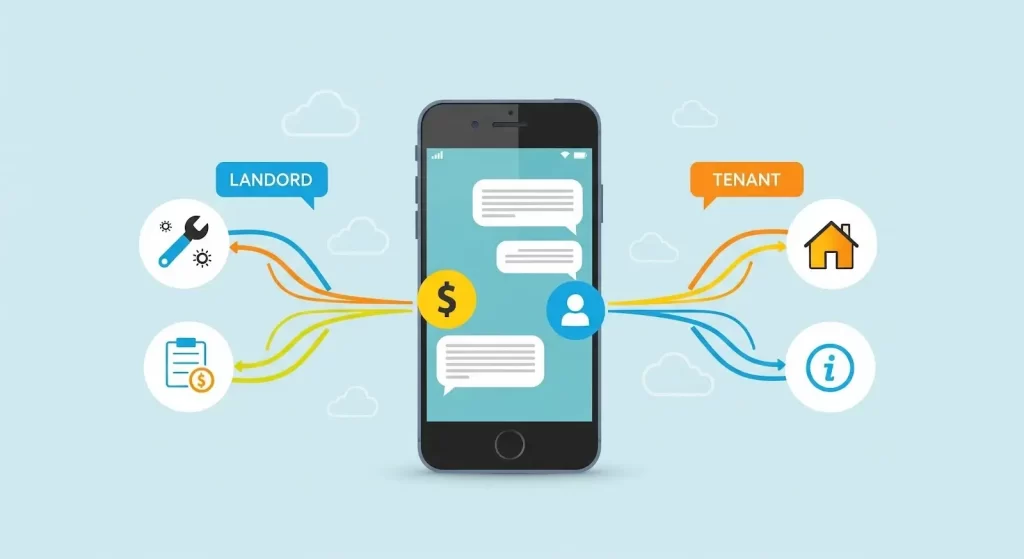
Communication is your strength (or your weakness) when dealing with various business tenants.
Some practical ideas include:
- One point of contact: Provide one email address or portal where tenants can make requests, report issues, and pose questions.
- Standard response times: Although you may not be in a position to repair something immediately, pledge to respond to requests within a given time period.
- Frequent check-ins: Checking in with every tenant (quarterly or every six months) is enough to reveal minor concerns before they become big complaints.
- Building-wide updates: Use periodic newsletters or updates regarding building improvements, future works, or alterations to rules and policies.
This ensures that tenants feel respected, heard, and informed. The feeling that someone is taking care of the property is often as important as the physical condition of the premises.
7. Leverage Property Management Software
Shrewd managers apply technology, rather than relying on a spreadsheet hidden in an obscure folder.
Think about using simple property management software or a shared system that is well-structured to assist you in keeping track of:
- Lease dates, rent reviews, and options.
- Work orders and maintenance schedules.
- Tenant requests and resolutions.
- Paperwork and safety inspections.
You do not need an enormous, complicated platform. Even simple instruments can provide:
- Reminders prior to important lease or compliance dates.
- A history of problems brought up and how they were resolved.
- More visibility across multiple properties and tenants.
The more complicated your portfolio, the more you will appreciate being digitally organized.
8. Manage Commercial Fit-Outs and Upgrades Strategically
Negotiations regarding fit-outs and upgrades are commonplace: who pays to have them done, who owns what, and what happens when a tenant stops leasing?
There are clever tricks, such as:
- Standardizing finishes (flooring, lighting, simple partitions) to allow spaces to be re-leased with minimal effort.
- Offering incentives, such as a partial contribution to the fit-out, to attract good anchor tenants—but ensuring the value remains with the property.
- Ensuring core services are adaptable, such as having enough power, data, and ventilation so that the space suits a large variety of future tenants.
Consider the long term: all upgrades must preferably render the property more accommodating, attractive, or easier to maintain for the next tenant, not just the current one.
9. Focus on Tenant Retention and Relationships
The most intelligent property strategy of all may be the most basic plan at the end of the day: deal with tenants as partners, not just payers.
In the case of multi-tenant properties, success relies on word of mouth. Provided you are responsive, fair, and proactive, tenants will tend to:
- Renew their leases.
- Suggest your space to other companies.
- Cooperate with you on changes and improvements as opposed to fighting with you.
Even small gestures, such as calling at the beginning of their major trading periods, congratulating them on business accomplishments, or seeking their input about upgrades, go a long way.
Bringing It All Together
The process of dealing with numerous business tenants under the same roof can be complicated, yet manageable. By knowing your tenant mix, creating flexible leases, making the most out of the space, remaining proactive with maintenance, creating value with technology, and fostering authentic relationships, you can turn your property into a profit-making, managed, and desired place to conduct business.
Smart strategies have nothing to do with being glitzy; they have to do with being steady, planned, and tenant-oriented.