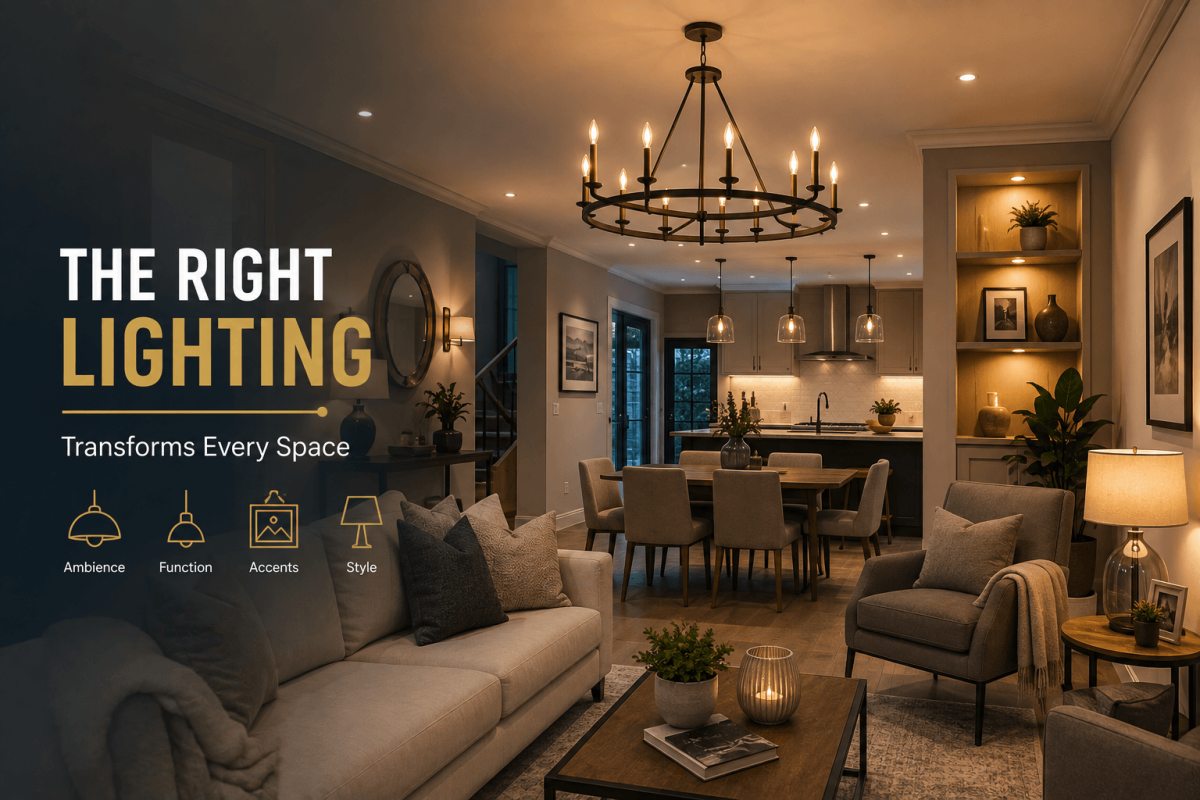
Lighting is one of the easiest aspects of a property to overlook during a renovation or interior update. Flooring, wall finishes, kitchens and bathrooms usually receive most of the attention, yet the way a room is illuminated can have an equally significant effect on how the space is perceived. A well-planned lighting scheme can make rooms appear more spacious, highlight architectural features and create a more comfortable environment for everyday living.
For homeowners preparing a property for sale, lighting can also influence first impressions. Buyers tend to notice whether a home feels welcoming and well maintained when they walk through it, and effective lighting can help bring out the best features of each room without requiring major structural changes.
Consider the Purpose of Each Room
There is no single lighting solution that works equally well throughout a property. Different rooms have different practical requirements, so the starting point should be how each space is used.
A kitchen, for example, needs sufficient illumination for food preparation and other detailed tasks, whereas a living room may benefit from softer and more layered lighting. Bedrooms generally require a calmer atmosphere, while hallways and entrances need enough light for safe movement without appearing excessively bright.
Before purchasing new fittings, consider:
- The main activities carried out in the room.
- The amount of natural light available during the day.
- The position of existing electrical points.
- The size and height of the room.
- Whether the lighting needs to serve practical or decorative purposes.
Taking these factors into account helps prevent fittings from being chosen purely for appearance.
Use Lighting to Add Character
A ceiling light does not have to be purely functional. In rooms with sufficient ceiling height and a relatively simple colour scheme, a carefully selected statement fitting can become an important part of the interior.
For traditional or transitional properties, Modern Chandeliers can provide a focal point above a dining table, within an entrance hall or in a larger living space. The aim is not necessarily to make the fitting the dominant feature, but to use it to complement the proportions and character of the room.
The scale of the fitting matters. An oversized chandelier can overwhelm a compact room, while a small fixture may disappear within a large space. Proportion should therefore be considered alongside style.
Layer Different Sources of Light
Relying on one central ceiling fitting can leave parts of a room poorly illuminated. Layered lighting offers greater flexibility by combining different sources for different purposes.
A useful scheme may include:
- Ambient lighting to provide general illumination.
- Task lighting for activities such as reading, cooking or working.
- Accent lighting to draw attention to artwork, shelving or architectural details.
Combining these elements allows homeowners to change the atmosphere according to the time of day and how the room is being used.
Pendant fittings can be particularly useful where focused illumination is required. In kitchens, dining areas or open-plan interiors, Contemporary Pendant Lights can provide practical illumination while also helping to define different zones within a larger space.
Think About Scale and Proportion
The dimensions of a lighting fitting should relate to the room and the furniture beneath it. This is especially important with dining tables, kitchen islands and larger seating areas.
A fitting positioned above a dining table, for example, should provide enough visual presence without making the table feel crowded. Similarly, several smaller pendants may work better than one large fitting in a long kitchen.
Ceiling height also affects the choice. Properties with generous ceiling heights can accommodate more substantial fittings, whereas rooms with lower ceilings may benefit from compact designs that leave sufficient visual space above head height.
Make the Most of Natural Light
Artificial lighting should complement rather than compete with daylight. Before installing additional fittings, consider how sunlight enters the room at different times of the day.
Mirrors, pale wall colours and carefully positioned furniture can help distribute natural light further into a space. Window treatments should also allow sufficient daylight into rooms where privacy requirements permit.
Once the natural light has been assessed, artificial sources can be positioned to address darker corners and provide consistent illumination after sunset.
Lighting Can Support Property Presentation
For homeowners considering a future sale, lighting deserves attention alongside other presentation improvements. Buyers viewing a property in the evening or during darker months may form a very different impression from someone visiting during bright summer daylight.
Replacing outdated fittings, correcting poorly lit areas and ensuring that all bulbs are functioning can make a home feel better maintained. It can also help property photography, particularly when interior images are being used as part of an online marketing campaign.
Good lighting will not compensate for fundamental maintenance problems or poor presentation, but it can reinforce the impression of a property that has been thoughtfully cared for.
Getting the Balance Right
A successful lighting scheme does not necessarily require expensive fittings or extensive electrical work. Often, the biggest improvement comes from considering how existing light sources interact with furniture, finishes and the way each room is used.
The most effective approach is to treat lighting as part of the wider interior rather than as an afterthought. When fittings are chosen according to the property’s proportions, natural light, architectural character and practical requirements, they can improve both functionality and atmosphere.
For homeowners updating a property, this relatively modest design consideration can make rooms feel more comfortable, distinctive and inviting—qualities that matter whether the objective is creating a better home or presenting the property to prospective buyers.