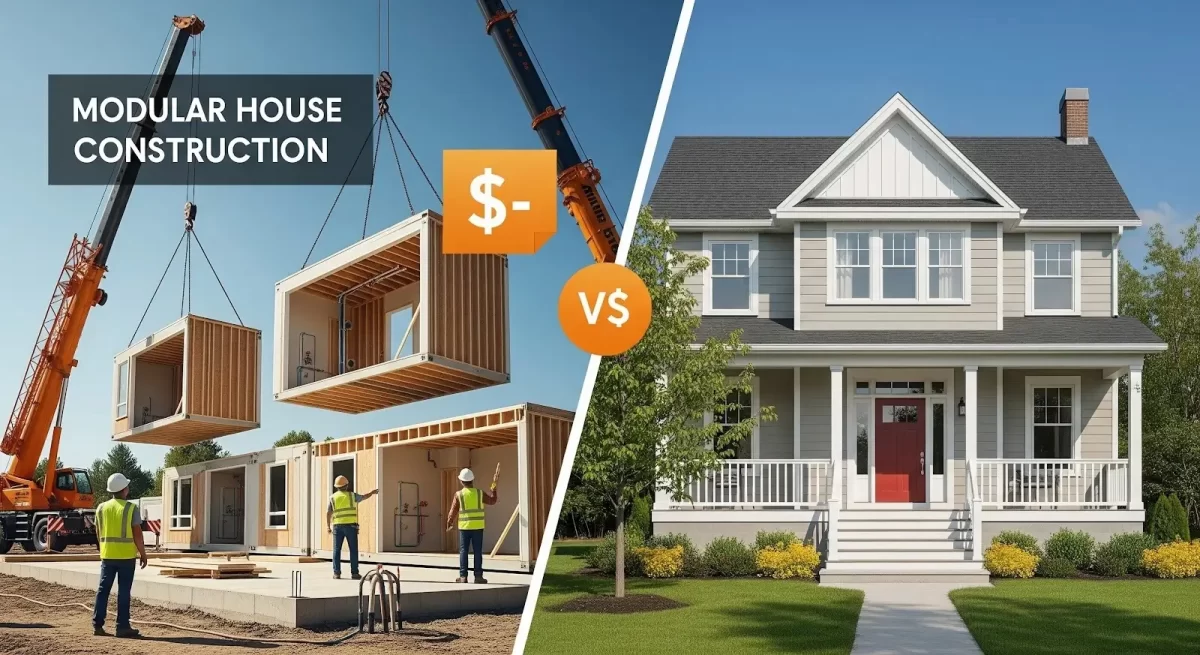
A choice between the construction of a modular house and the acquisition of an existing house is a big one and it is more so when the cost is a big concern. Prefab homes are also called modular homes, which are constructed in a factory, and then assembled at the site, and provide some potentially exclusive benefits compared to ordinary ones. Yet, what about their comparison in terms of price to the existing properties? We should deconstruct it in a relatable, educative manner.
What Are Modular Homes?
Modular houses are constructed in sections or modules in a carefully regulated factory setting and are then trucked to the construction site where they are assembled. Such homes are built to the same building codes and quality standards as conventional site-built homes, and in some cases, they are indistinguishable once finished (unlike mobile homes or trailers).
The primary appeal is that modular homes will regularly have adaptable and tailored design and construction is usually more efficient, less waste, and consumes less energy on the building process. These are homes that can be occupied in a much shorter period compared to the normal homes.
Cost Analysis: Modular Build vs. Buying Existing
Building Modular
- Reduced Labor and Materials Expenses: As a result of the indoor production of modular homes, the process has grown to be very efficient that the materials and labor costs as well as the waste produced are all minimized. This might lead to the construction of a modern home with similar features at a cost that is 10-20% less than a traditional one.
- Faster Build Period: The construction period can be reduced to approximately 3 months and this saves on the financing and holding expenses.
- Customization Costs: Although modular homes are available in a wide range of design choices, they may involve a lot of customization or upgrade, which may increase the cost. Nevertheless, the computer-assisted design approach leaves several options available in a set budget.
- Extra Costs: There are other costs like the cost of buying land, foundation, permits, utility set ups and site preparation which are additional expenses and should be included in the budget.
Buying an Existing Home
- Bank Valuation Property Price: When purchasing property, there are usually the market-based prices which are guided by location, demand, and the age and condition of the property. The sale is usually based on bank valuation property estimates which may differ a lot.
- Possible Renovation Costs: There is the possibility of having to update or repair the existing homes, which are extra costs that the new modular homes tend to avoid.
- Strong Neighborhoods and Amenities: Purchasing a house in an established neighborhood may be accompanied with a higher pricelog but in most cases an extra premium price is charged on the property.
Value Comparison: What You Get for Your Money
- Modular Homes are usually energy efficient due to stricter building standards and less wastage of resources on-site, which can save the heating and cooling money in the long-term.
- The existing houses are often characterized by their uniqueness, well-grown trees and plants, and community amenities, which sometimes have a value that is difficult to measure.
When Modular Homes are Less Expensive
- When you desire a new and custom-built house at a price lower than that of the new site-built houses, modular construction offers a competitive alternative.
- Construction of the modular saves money when the local real estate prices are high or when it is hard to find an existing home in the desired location.
- Modular houses can dodge the expensive overhead of older homes getting an update or a renovation.
When Purchasing Existing Could Be Right
- When the property market is good and houses are affordable, then buying may take shorter time and fewer variables are unknown.
- In case you like staying in a community that has infrastructure already in places.
- You desire a house with special architectural value or historical importance that can not be easily recreated with modular houses.
Tips for Evaluating Your Choice
- Take into account the total costs of modular homes such as land, permits, site work and financing.
- Consider the extent to which you want customization and the effect it will have on price.
- Investigate the market prices of the real estate and the bank valuation property trends.
- Consider timing- modular homes take shorter time to construct but purchasing an existing one may take shorter time to get in case financing is easy.
You may wish to consider going modular, in which case, you may discover that prefabricated homes present an intelligent combination of low costs, expediency and quality to suit contemporary lives.
A modular home is a relatively less expensive and a very efficient option of obtaining a new house designed to suit your needs, particularly when the cost is compared to the newer traditional construction or a refurbishment of an older house. The savings however, would be highly reliant on your particular situation such as your place of building, land prices and to what extent you customize it.