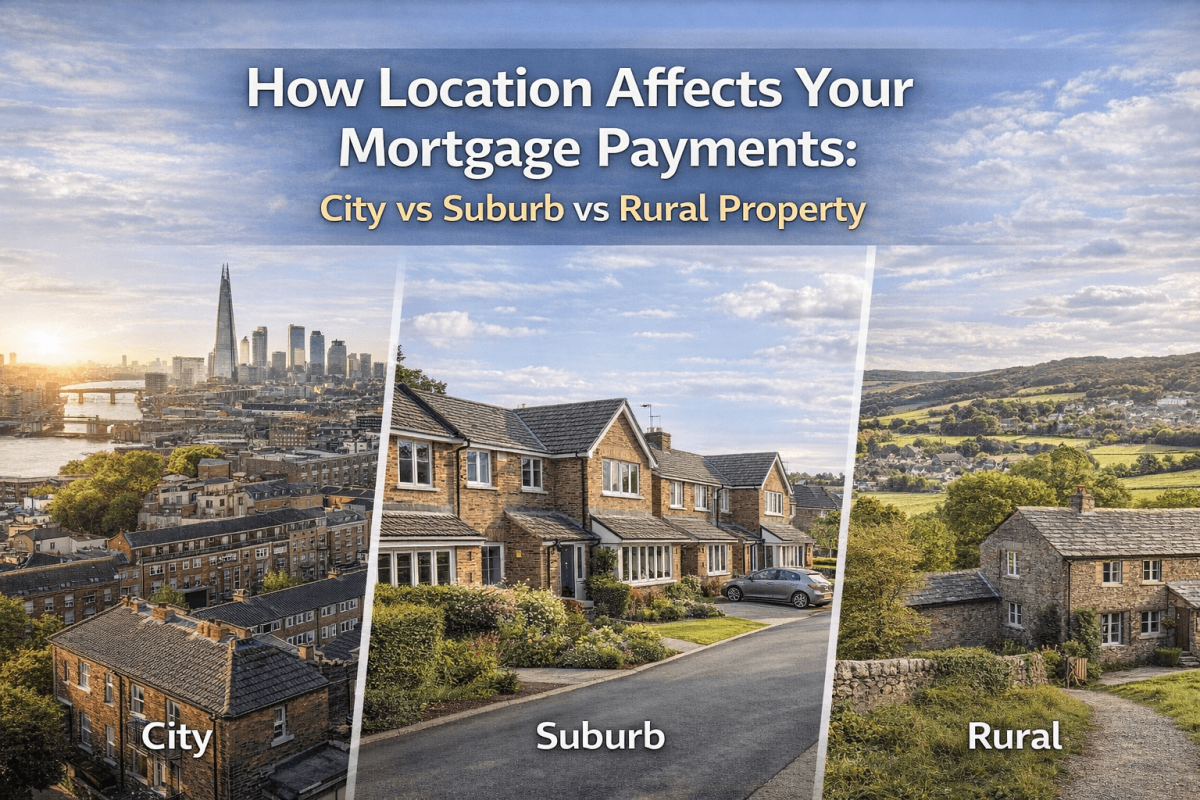
When buying a home, most people focus on the price, size, and lifestyle benefits of the property. However, one of the most important factors influencing your monthly mortgage payments is location. Whether you live in a busy city, a quiet suburb, or a rural village can make a significant difference to how much you borrow, the interest rate you receive, and the overall affordability of your home.
Many homeowners do not realise that where their property is located can push them into paying more for their mortgage than necessary. If you are unsure whether your current deal is competitive, it may be worth reviewing your situation.
In this article, we explore how mortgage payments differ between city, suburban, and rural properties and why location plays such a critical role in shaping your home finance.
Why Location Influences Mortgage Costs
Mortgage lenders assess risk before offering a loan, and location is a major part of that decision. Properties in popular or high-demand areas usually cost more, which means buyers need larger mortgages. Larger loans lead directly to higher monthly repayments and more interest paid over time.
Location also affects how easily a property can be resold if a borrower defaults. Homes in cities and commuter towns are seen as more liquid assets, while rural properties or those in isolated areas can be harder to sell quickly. This influences the interest rate and lending criteria applied to each borrower.
Other factors include the local property market, employment opportunities, and infrastructure. Areas with strong transport links, good schools, and steady house price growth are considered safer by lenders and often come with more competitive mortgage products.
Mortgage Costs in City Properties
City properties are usually the most expensive to buy, which results in higher mortgage balances and higher monthly repayments. Urban areas attract buyers due to job opportunities, transport connections, and lifestyle convenience, keeping demand and prices high.
Flats and apartments dominate many city markets, and these often come with additional costs such as service charges and ground rent. These extra expenses add to the overall financial burden of homeownership, even if mortgage interest rates are competitive.
While buyers in cities often have access to a wide range of mortgage lenders, the size of the loan can still make city living more expensive in the long term. Even a small difference in interest rate can have a big impact when applied to a higher property value.
Mortgage Costs in Suburban Areas
Suburban areas offer a balance between affordability and accessibility. These locations are popular with families and professionals who want more space without moving too far away from major towns or cities.
Property prices in suburbs are generally lower than in city centres, which leads to smaller mortgage loans and more manageable monthly repayments. Lenders also view suburban properties as stable investments because they tend to retain value and attract consistent demand.
However, certain factors such as school catchment areas, transport links, and local amenities can still drive prices upward. Buyers may take out longer mortgage terms to afford larger family homes, but overall suburban mortgages are often seen as lower risk and more predictable than city or rural options.
Mortgage Costs in Rural Locations
Rural properties usually come with lower purchase prices, but they can present unique challenges when applying for a mortgage. Some rural homes are built using non-standard materials or are located in areas with limited access to services, which can reduce the number of lenders willing to offer finance.
Because there are fewer comparable properties in rural markets, lenders may find it harder to assess resale value. This can lead to stricter lending criteria or higher deposit requirements. In some cases, borrowers may also face slightly higher interest rates to reflect perceived risk.
Maintenance and insurance costs can also be higher in rural areas due to larger properties, older buildings, or exposure to flooding and weather-related risks. While monthly mortgage payments may be lower, overall homeownership costs can still be significant.
How Location Can Cause You to Overpay on Your Mortgage
Location can indirectly cause homeowners to overpay if they do not review their mortgage regularly. Buyers in competitive city markets may rush into deals with less favourable terms due to pressure from rising prices. Over time, this can leave them stuck on expensive standard variable rates.
Rural homeowners may also accept higher interest rates because they believe there are limited alternatives. Meanwhile, suburban homeowners might not realise that rising property values could allow them to remortgage at a better rate.
Many people assume that their mortgage is fixed and cannot be improved, but changes in location value, market conditions, and personal finances can all create opportunities to save. If you want to check whether your current mortgage deal is still right for you, the guide on are you paying too much for your mortgage provides a helpful starting point.
Tips to Reduce Mortgage Costs Based on Property Location
No matter where your property is located, there are practical steps you can take to control mortgage costs:
- Review your mortgage every few years to ensure you are not paying more than necessary.
- Consider nearby suburbs or emerging areas when buying to benefit from lower prices.
- Improve your property’s energy efficiency, as some lenders offer better rates for energy-efficient homes.
- Compare lenders regularly, especially if you live in a rural or specialist property market.
- Seek professional advice to find mortgage products that suit your specific location and property type.
Small adjustments in interest rate or loan structure can lead to significant savings over the lifetime of a mortgage.
Conclusion
Where you choose to live has a direct impact on your mortgage payments. City properties often mean higher monthly costs, suburban homes offer a balance of affordability and stability, and rural properties come with specific lending challenges. Understanding these differences can help you make smarter decisions when buying or refinancing a home.
If you are considering buying or remortgaging in the West Midlands, speaking with expert local estate agents in Walsall can help you understand how location-specific market conditions affect both property prices and mortgage affordability.
Before committing to a property or renewing your mortgage, it is essential to check whether your location is pushing you into higher payments than necessary.